Vera Flores · 5 September 2026
Thatchvale Beekeepers Detail Hive Adjustments for Changing Weather Trends
Beekeepers across Thatchvale have reported adjustments to hive management in response to documented shifts in local temperature and precipitation records over recent years. Data from the UK Met Office indicates that average winter temperatures in the region have risen by approximately 1.2 degrees Celsius since 1990, while summer rainfall patterns show increased variability with some months recording up to 30 percent less precipitation than historical averages. These changes prompt practical modifications in hive design and placement without altering core beekeeping principles.
Observed Weather Impacts on Local Colonies
Local records compiled by the Thatchvale Beekeepers Association reveal that milder winters since 2015 correlate with higher rates of Varroa mite survival, as fewer prolonged cold periods disrupt the parasites' reproductive cycles. Beekeepers note that colonies entering winter with higher mite loads require additional monitoring starting in early autumn. Summer heat spikes, including temperatures exceeding 28 degrees Celsius on multiple days in 2025, have led some keepers to elevate hive stands by 15 centimeters to improve airflow beneath the structures.
One group of keepers documented colony losses of 12 percent during the unusually wet spring of 2024, attributing the decline to reduced foraging days and increased moisture buildup inside hives. They responded by installing screened bottom boards on 40 percent of their equipment, which allows better ventilation while maintaining protection from pests. Such adaptations draw from established practices shared through regional networks rather than experimental methods.
Practical Modifications Implemented
Insulation techniques have gained traction among Thatchvale practitioners. Several operations now wrap hives with reflective materials during peak summer months to moderate internal temperatures, while others add removable foam panels in late autumn to buffer against sudden cold snaps. Positioning hives near windbreaks, such as hedgerows, reduces exposure during storms, a step supported by observations from keepers managing sites on the eastern edges of the parish where gusts average 15 percent stronger than central locations.
Feeding schedules also reflect weather data. When nectar flows shorten due to extended dry spells, keepers supplement with sugar syrup solutions earlier in the season, typically beginning in August rather than September. Records from the association show this timing adjustment helped maintain colony strength through the 2025 drought period, when local rainfall totaled 65 millimeters below the five-year average for that month.
Community Sharing and Data Collection
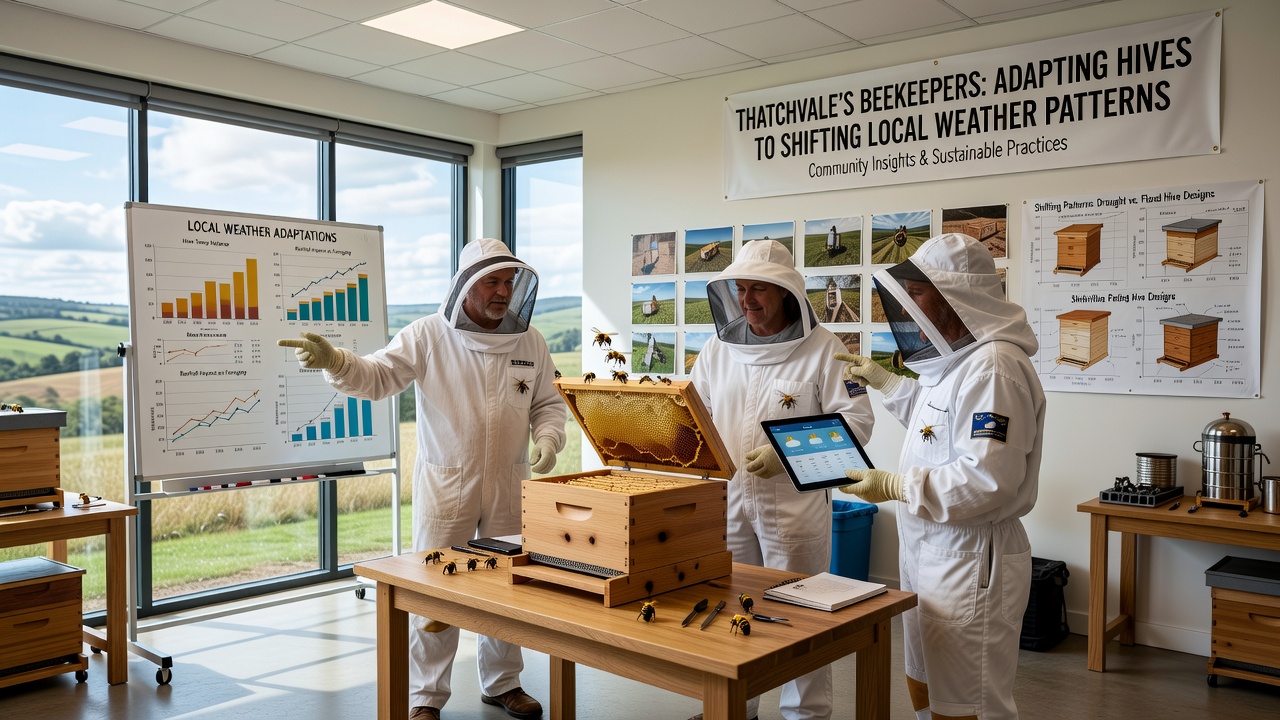
The Thatchvale Beekeepers Association holds quarterly meetings where members exchange measurements on hive weights, brood patterns, and weather correlations. In September 2026, participants reviewed drone-captured imagery of foraging routes alongside rainfall logs, identifying that colonies near water sources maintained steadier populations during dry intervals. These sessions emphasize collective data over individual anecdotes, with standardized recording sheets distributed to track variables such as hive entrance reducers used during high-wind events.
External research provides additional context. Studies from the University of Guelph in Canada have examined similar climate-driven changes in bee behavior, noting parallels in mite pressure under warming conditions, while reports from the Food and Agriculture Organization of the United Nations detail global examples of ventilation upgrades in apiaries facing temperature fluctuations. Thatchvale keepers reference these sources when evaluating equipment suppliers for moisture-resistant materials.
Equipment and Monitoring Advances
Digital sensors now appear in roughly one-third of monitored hives in the area. These devices log temperature and humidity every hour, sending alerts when readings exceed thresholds established through prior season comparisons. Keepers using the technology report earlier detection of condensation issues during autumn transitions, allowing timely addition of absorbent mats inside hive roofs. This approach integrates with traditional inspections rather than replacing them.
Seed selection for nearby plantings also factors into adaptation strategies. Association members coordinate with local landowners to favor drought-tolerant flowering species that extend nectar availability into drier periods. Data collected over three seasons indicates these plantings supported an average 8 percent increase in late-summer honey stores compared with control sites without such modifications.
Conclusion
Thatchvale beekeepers continue refining their methods based on accumulated local measurements and broader research findings. The focus remains on consistent record-keeping and incremental equipment changes that align with verified weather trends rather than untested innovations. Ongoing collaboration through the association ensures that adaptations remain grounded in shared evidence from the region.